[email protected]

Ridgeline Six · CAIRN-7

Space Architecture & Design

Using real exploration research to take a design concept to photoreal render, film and 3D-printed model.

Ridgeline Six

My own Mars base design concept: the CAIRN-7 inflatable habitat under sintered-regolith shells, built autonomously before the crew arrive. Every image is rendered by MarsSurfHab. Swipe through, or tap an image to view it full size.
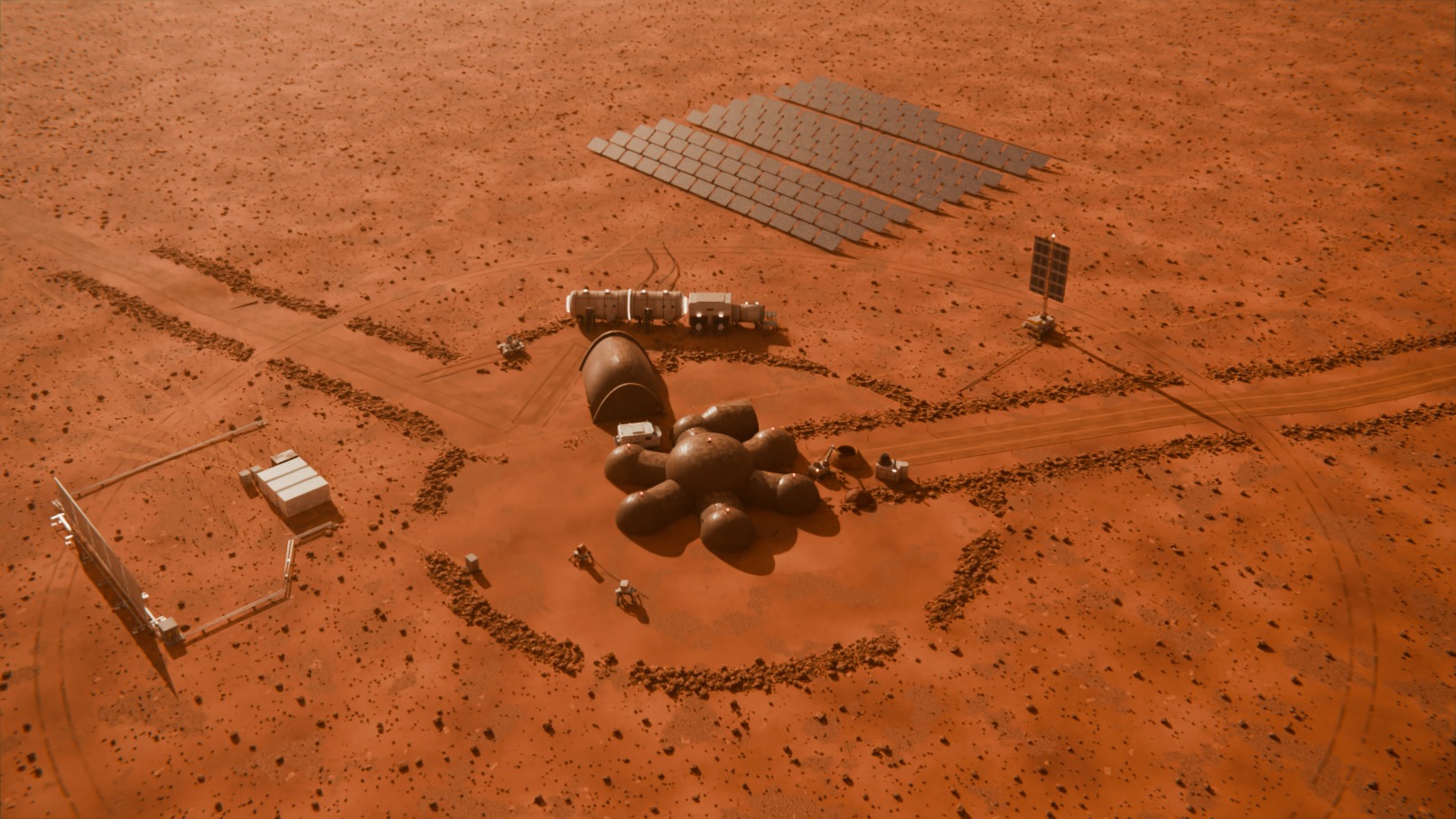
Bird's-eye view of the Ridgeline Six base: regolith-covered habitats, rigid modules, solar field and berms
Ridgeline Six from above. The whole base: habitats under regolith shells, rigid modules, power and the cleared paths between them.
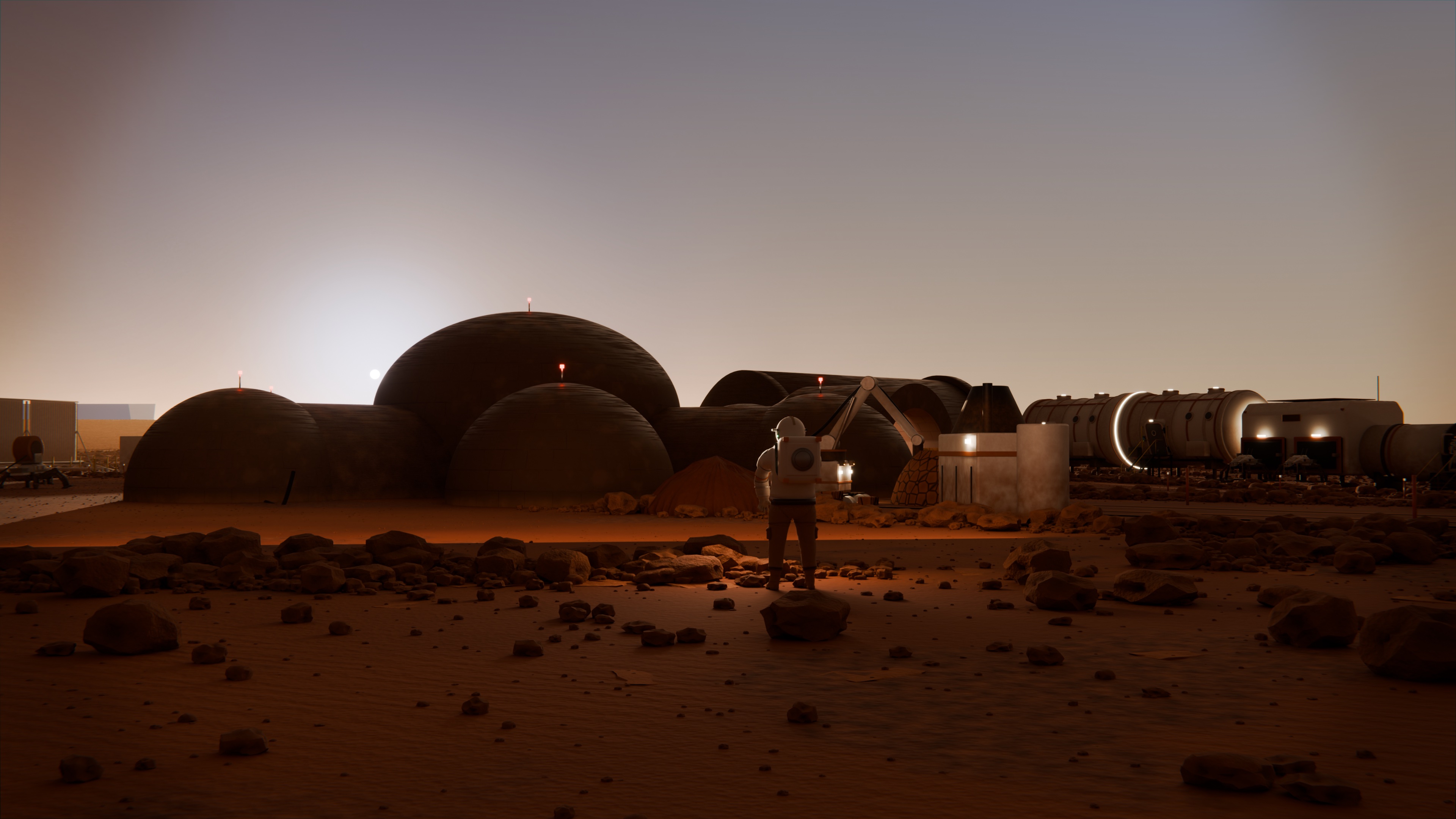
Blue hour at Ridgeline Six: an astronaut stands before the regolith-covered habitat domes as the Sun sets
Blue hour. Mars sunsets glow blue near the Sun: fine dust scatters blue light forward.
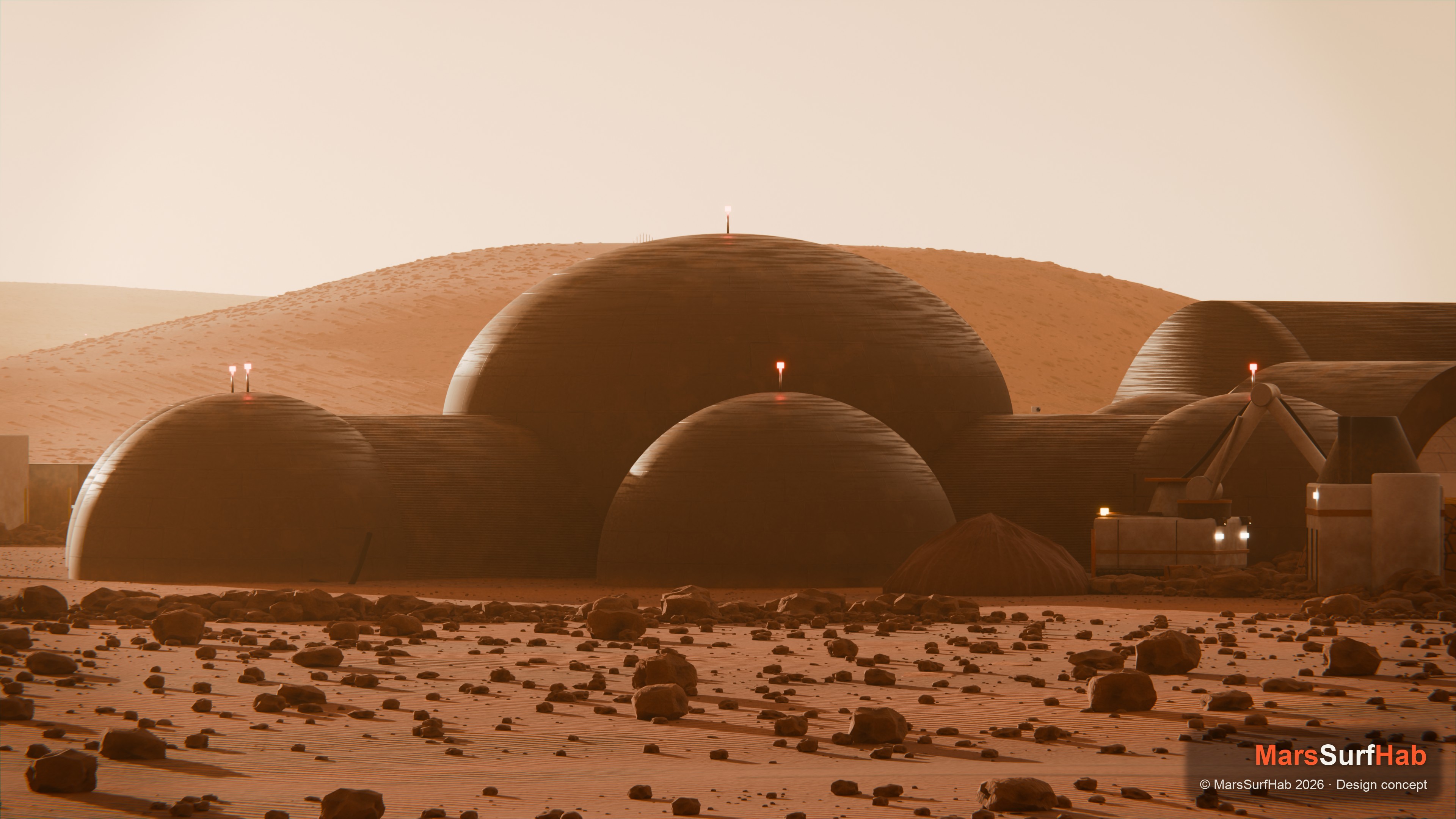
Long-lens view of the regolith-covered CAIRN-7 domes
CAIRN-7. Inflatable habitats under regolith shells, built autonomously before the crew arrive.
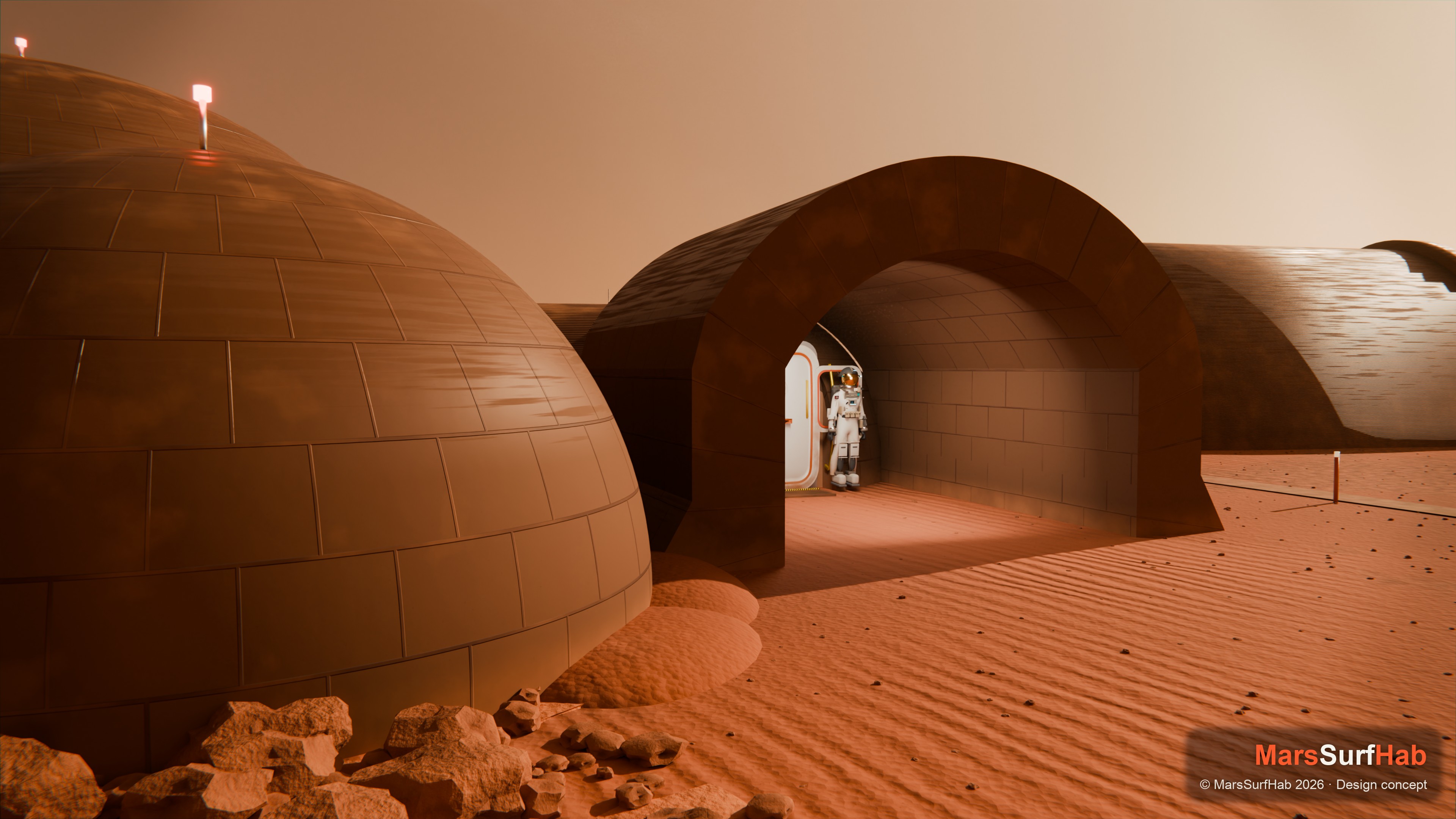
The arched airlock porch with its flat white hatch set into the regolith shell
The airlock porch. Crews step out into shelter, not straight onto the surface.
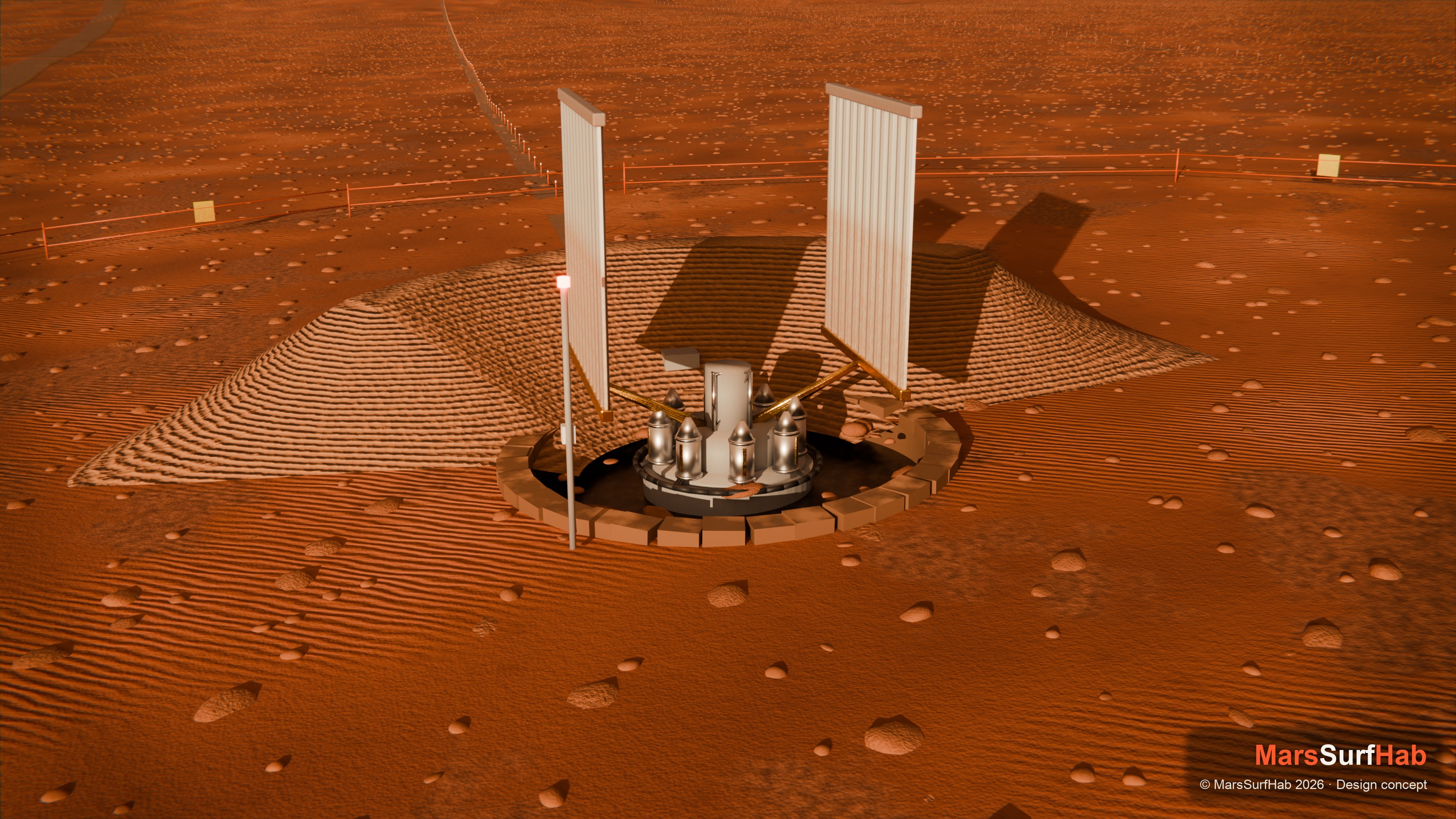
A fission power unit in a pit behind a regolith berm, with two upright radiator panels
Fission power. A reactor unit sheltered in its pit behind a regolith berm.

Mars right now

Distance from Earth
–
million km
Radio delay, one way
–
for a message to reach Mars at light speed
Season at Ridgeline Six
–
northern hemisphere, 39° N
Next Earth–Mars window
–
the best time to launch, about every 26 months

Calculated live in your browser from NASA/JPL planetary orbital elements (approximate). Launch window shown for the most efficient (Hohmann) transfer.